A Graphic Designer’s Review of Home Office Workspace Line Art
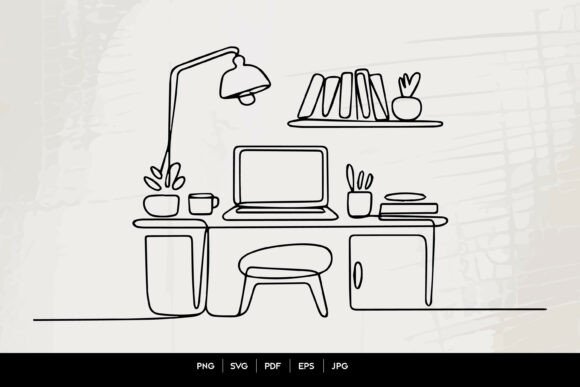
First impressions matter, and this Home Office Workspace Line Art set carries a specific, thoughtful mood. It presents a curated, almost aspirational snapshot of a productive, creative environment. The line art style—clean, uncluttered, with a consistent stroke weight—feels modern yet approachable. It’s not overly technical or cold; the inclusion of the plant, the coffee mug, and the books adds a touch of warmth and personality. This isn’t just a generic office; it’s a workspace, suggesting a blend of focus and comfort. Immediately, I see it fitting projects for clients in the handmade business, creative coaching, boutique stationery brands, or any small business selling products or services tied to productivity, wellness, or thoughtful work.
The Versatility of a Single, Cohesive Illustration
For a designer juggling multiple brand identity elements, having a cohesive set like this is a practical advantage. The scene is a single, interconnected illustration, not a bundle of disparate clipart. This means it can act as a foundational graphic design asset. For a recent client project—an independent bookstore launching a line of reading journals and planners—this exact asset was under consideration. The concept was “The Reading Nook & Workspace.” This line art, with its integrated bookshelf, desk, lamp, and laptop, became a compelling central visual. We could use the entire scene as a large format hero graphic for their website refresh, and then isolate elements—like the chair or the plant—for smaller, decorative accents on product labels and social media graphics.
Where This Workspace Illustration Excels
In practical application, this asset shines in areas that benefit from a complete, thematic scene.
- Large Layout Areas: As a full-width banner on a website or a dominant visual on a poster or flyer, it establishes tone immediately.
- Printable Design Products: For wall art, planner covers, or journal inserts, the line art provides a sophisticated, ready-to-print motif.
- Themed Campaign Visuals: For a seasonal campaign focusing on “New Year, New Workspace” or “Spring Refresh,” it offers a versatile base graphic.
- Product Mockups & Packaging Details: Scaled down, elements like the laptop or mug can be used as subtle patterns or corner embellishments on packaging design for tech accessories or coffee-related products.
- Digital & Social Media Graphics: For Pinterest pins, Instagram posts, or blog visuals about productivity, the asset feels authentic and engaging.
- Craft & Merchandise Applications: The clean lines make it ideal for Cricut projects, sticker design, and t-shirt design where vector editability is key.
Potential Pitfalls and Designer Considerations
Every asset has its limits, and professional use requires knowing them. This Home Office Workspace Line Art is detailed. When reduced to a very small size—say, for a favicon or a tiny logo—the intricate lines of the bookshelf or laptop keyboard can become muddled and lose definition. It should be used carefully in crowded layouts where its complexity might compete with other elements, or on very complex backgrounds that break its clean silhouette.
While versatile, it leans toward a modern, creative aesthetic. It might feel less appropriate for strictly corporate, financial, or high-tech branding that demands ultra-minimalist symbols. The emotional appeal is toward authenticity and creative work, not raw efficiency.
Testing the Asset in Real-World Scenarios
Before committing this to a client’s commercial design, a designer must run practical tests.
- Scale Testing: Preview it at both 50px and 2000px wide. Does it hold its character at small sizes? Does it remain crisp when enlarged?
- Contrast & Backgrounds: Place the PNG (assuming transparency is provided) on light, dark, and textured backgrounds. Does it maintain sufficient contrast for readability?
- Black & White Conversion: Test it in monochrome. This is crucial for print applications where color might not be used, ensuring the line weights still create clear visual hierarchy.
- Font Pairing: Mock it up with different typography. It pairs naturally with clean sans serif fonts. Try it with a serif font for a more classic editorial feel, or a delicate script font for a personal touch. Avoid overly bold display fonts that might overpower the illustration’s subtlety.
- File Format Audit: The inclusion of SVG, EPS, and PDF is a major plus for vector editability. Check the SVG file in a vector editor to confirm paths are clean and grouped logically for easy color changes or element isolation. The PNG should be high-resolution for print-on-demand use.
- Commercial License Verification: Always confirm the licensing terms before using any digital product for a client project or your own Etsy product line. Ensure it covers the intended commercial use.
Building Professional Trust Through Consistent Assets
Ultimately, the choice of a design asset like this impacts the final project’s perceived professionalism. For a small business branding project, using a cohesive, high-quality illustration helps build visual trust. It signals that the brand’s visuals are intentional and polished. This line art, when applied consistently across marketing visuals, from website graphics to printable thank-you cards, reinforces brand consistency. It becomes a recognizable element that audiences connect with the brand’s core theme—in this case, a thoughtful, creative workspace.
For content creators and digital sellers, this asset can be the cornerstone of a Canva template bundle or a series of editorial design pieces. Its mood supports storytelling about work-life balance, creativity, and home-based entrepreneurship.
A Final Judgment for Client Work
After reviewing Home Office Workspace Line Art from this practical lens, it stands as a strong candidate for specific client projects. Its value lies in its completeness and mood. It’s more than clipart; it’s a scene that tells a story. It would not be my first choice for a stark, minimalist tech logo design, but it would be a top contender for a creative marketplace seller, a lifestyle blogger’s brand identity, or a craft brand’s packaging design. The provided file formats, especially the vector files, offer the flexibility needed for professional adaptation across print and digital. Used judiciously—avoiding overly small applications—it can elevate a design concept, making the final result feel cohesive, intentional, and visually engaging.