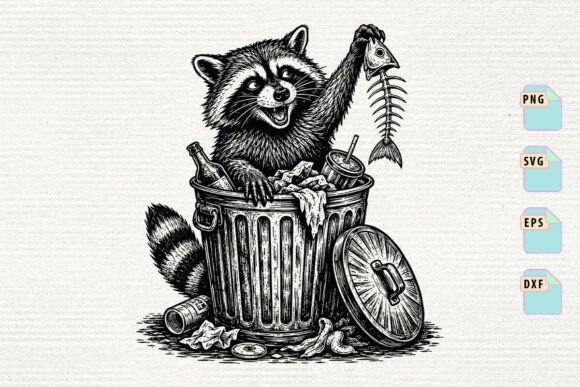
Raccoon Finding Fish Skeleton in Trash Embroidery Review
The First Impression: A Clever, Conversational Design
When you first look at Raccoon Finding Fish Skeleton in Trash, it doesn’t just feel like a graphic; it feels like a story. The stipple art style gives it an immediate handmade, illustrative quality that’s perfect for embroidery. The mood is playful and a little mischievous—it’s a trash panda living its best life. This isn’t a generic woodland animal; it’s a character with personality. That personality is what will make your finished product stand out on a sweatshirt or tote bag. It’s quirky, it’s funny, and it sparks a conversation, which is exactly what you want for a custom apparel piece or a unique gift.
Where This Design Naturally Belongs
I immediately pictured this design embroidered on a durable canvas tote bag for a friend who loves quirky nature themes. The scene has enough detail to be interesting but isn’t overly cluttered, so it would translate well into stitches. It’s also a strong candidate for a relaxed-fit sweatshirt—the kind of cozy, personal item people wear for comfort and a bit of humor. For a baby’s blanket or nursery decor, the animal theme works, but the fish skeleton and trash can add a slightly edgy, grown-up twist, making it more suited for a child’s room with a modern, non-traditional aesthetic. Think of it as a great gift for an adult who appreciates clever, slightly offbeat art.
Real-World Performance on Actual Products
Let’s walk through a real scenario: you’re preparing a custom embroidered tote for a small shop’s summer market. Using Raccoon Finding Fish Skeleton in Trash as the focal point, you need to consider how it will stitch out.
The stipple illustration style, with its dotted textures, will rely heavily on fill stitches. On a tote bag’s thicker fabric, you’ll need a good stabilizer to handle that density without puckering. The raccoon’s shape and the trash can outline are clear, which is excellent for satin stitch borders or running stitch details. The fish skeleton, being a smaller element within the scene, is a key test point. In a smaller hoop size, those tiny bones might blend if the stitch density is too high or the thread color contrast isn’t strong. On a dark fabric background, you’d likely need to plan for lighter thread colors to keep the entire scene readable, especially the finer lines.
For apparel like t-shirts or caps, the curved surface of a cap presents a challenge for the rectangular trash can element. You’d want to test the design on scrap fabric first, hooping it as you would for the cap, to see if any distortion occurs in the layout. On a stretchy knit sweatshirt, the overall stitch area is substantial, so using a cutaway stabilizer would be wise to maintain integrity after frequent washing.
Where to Exercise Caution
This design thrives on medium to larger hoop sizes. Attempting it on a very small baby item, like a tiny shirt pocket, would compress the details and likely lose the charm. The humor relies on seeing the whole scene—the raccoon, the trash, the fish. Shrinking it too much turns it into a vague shape.
Textured fabrics like linen or tweed could interfere with the stipple dot effect, making the fill stitches look uneven. Thin fabrics might show significant pull from the fill stitch areas. Always, always run a test stitch on a scrap of your target fabric. Check the thread color contrast, especially if moving from a light fabric mockup to a dark fabric final product. Those small, delightful details are what sell the design; if they get lost, the product’s value and visual appeal drop.
Impact on Your Craft Business and Customer Perception
From a commercial perspective, Raccoon Finding Fish Skeleton in Trash offers strong handmade presentation. It looks like a designed piece, not a stock image. For an Etsy seller or boutique, that adds to brand consistency if your shop leans toward illustrative, humorous themes. It feels professional and intentional.
When a customer sees this embroidered on a finished product, the reaction is likely a smile or a laugh. That engagement is gold. It makes the item giftable and memorable. For a creative entrepreneur selling at a craft fair, an item with this design on display can attract attention and start conversations, which drives sales. It’s also a versatile digital embroidery file for creating printable mockups to list your products online, showing potential buyers exactly how it would look as a patch or on an apron.
However, buyer trust comes from quality execution. If the stitches are clean and the details sharp, the design enhances perceived value. If the embroidery is messy, the complex scene can look chaotic. Your skill in choosing the right stabilizer, thread, and hoop size to honor the design’s intent is crucial.
Practical Notes for the Embroidery Designer
Before committing to a client project or a batch of small shop merchandise, here’s your action list. First, stitch it out on scrap fabric that matches your final product material. Observe the stitch density—are the fill areas too dense for thin fabric? Second, check the small details, like the fish skeleton and the raccoon’s facial features, for clarity. Third, test it in both light and dark fabric backgrounds if you plan to offer both; you might need slightly different thread palettes.
Use a proper stabilizer suited to your fabric type. For a kitchen towel or apron, which will be washed often, durability is key. Confirm the licensing terms for this graphic before selling finished items or commercial embroidery projects. While it’s described as versatile for craft, you must know if it’s cleared for commercial use. Finally, consider how it works as an embroidered patch versus direct garment embroidery. The design’s borders might make it a great standalone patch applied to a backpack or hat.
Remember, the beauty of a design like this is in its storytelling. Your job as the embroidery designer is to translate that story into stitches with care, so the final product—whether a holiday gift, personalized sweatshirt, or boutique product—delivers its clever, conversational punch. Take the time to prepare, and Raccoon Finding Fish Skeleton in Trash can become a standout piece in your portfolio.